The initial prototype.
The initial prototype is complete. Early partial tests support the basic operation of the concept.
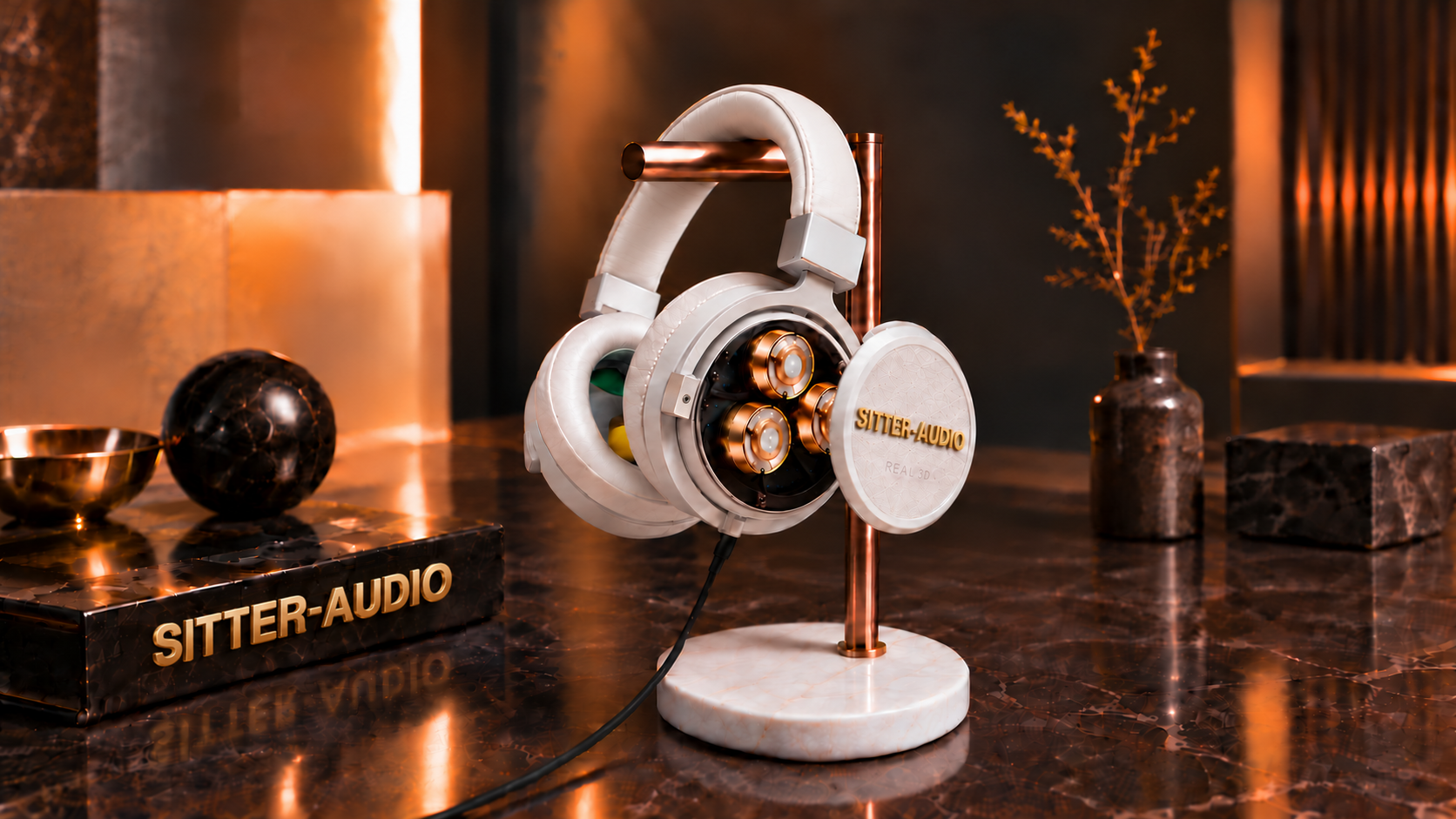
Sitter-Audio Real 3D Audio.
Three drivers per ear.
Rethinking spatial audio.
Footsteps behind you. A voice in front of you. Sound moving through space. Sitter-Audio is developing headphones designed to make directional sound perceptible, starting from the geometry of the human ear.
Our development objective. The spatial effect has yet to undergo scientific validation.
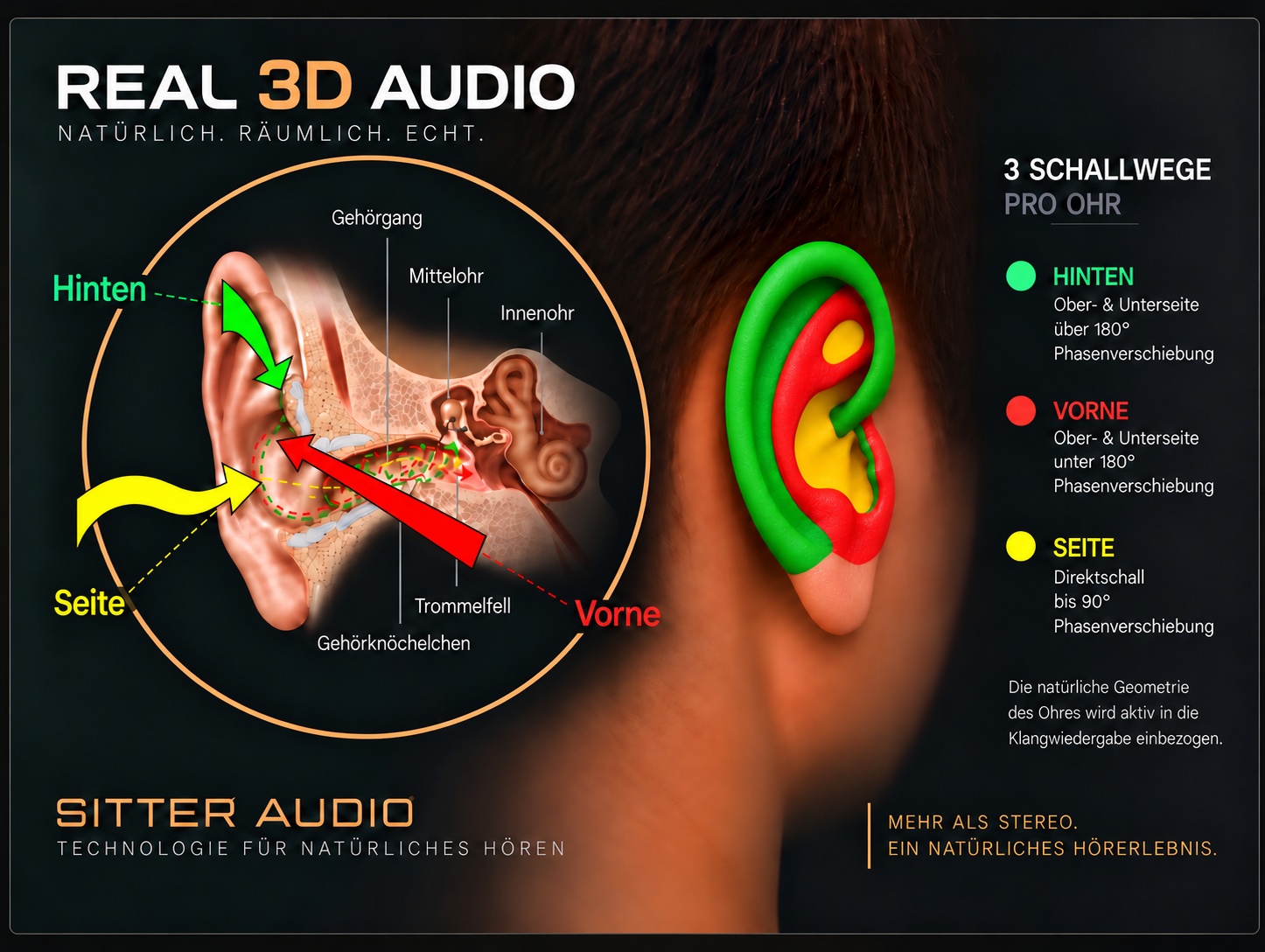
Three differently positioned drivers per ear are intended to engage natural directional hearing: one for the lateral path and two for the front and rear portions of the vertical spatial plane.
Geometry, transitions and signal processing will be evaluated and refined together in the next development stage.
Designed for the front part of the vertical spatial plane.
Designed for the lateral region, complementing the front and rear paths.
Designed for the rear part of the vertical spatial plane.
This division describes the current working model. The interaction and spatial performance remain subject to systematic evaluation.
Our original drawings illustrate how the sound paths are arranged around the head and ear, and how they are intended to work together.
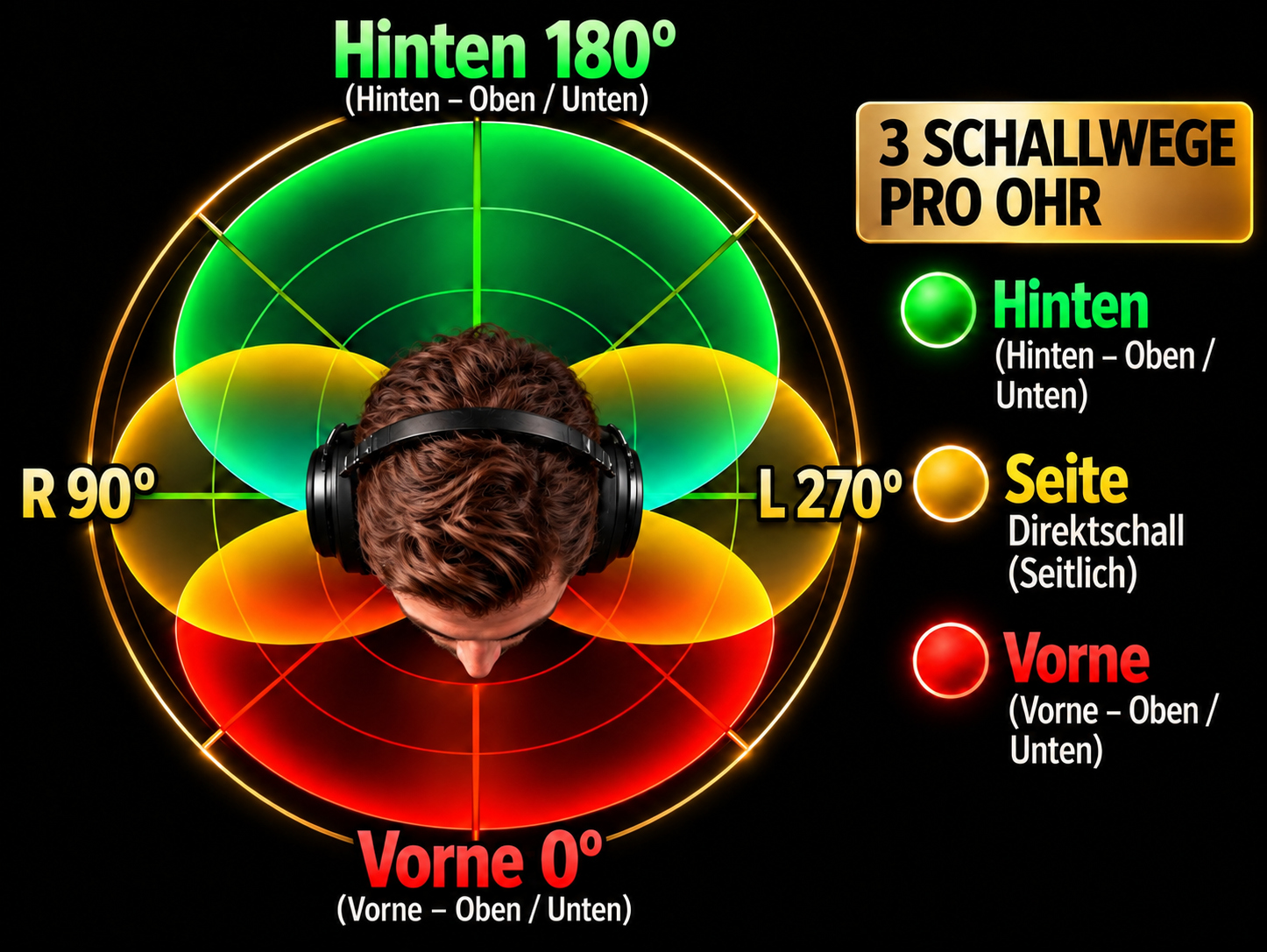
An overview of the three sound paths and their spatial relationships.
Open original diagram ↗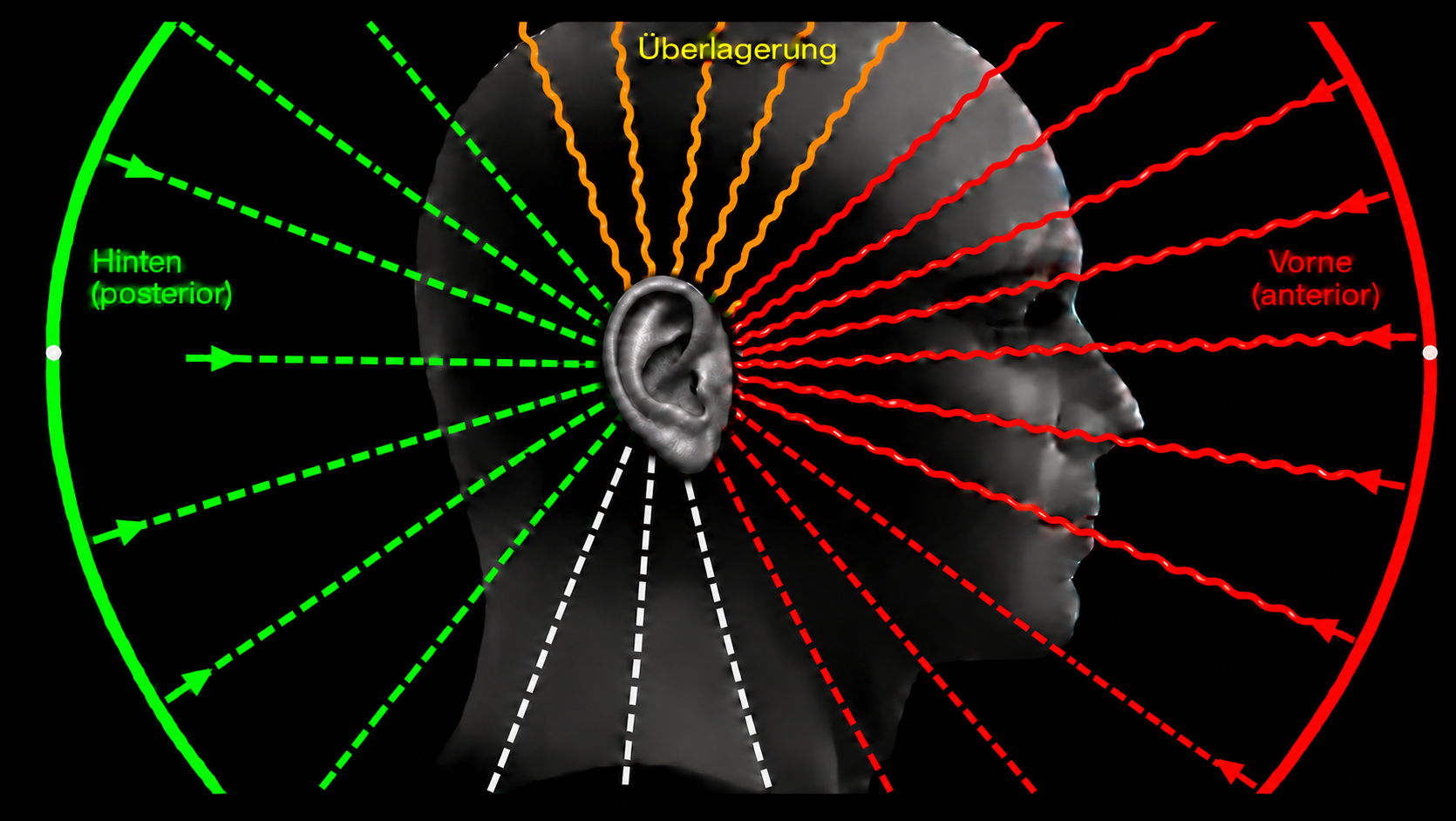
Directions and angles in the spatial working model.
Open original diagram ↗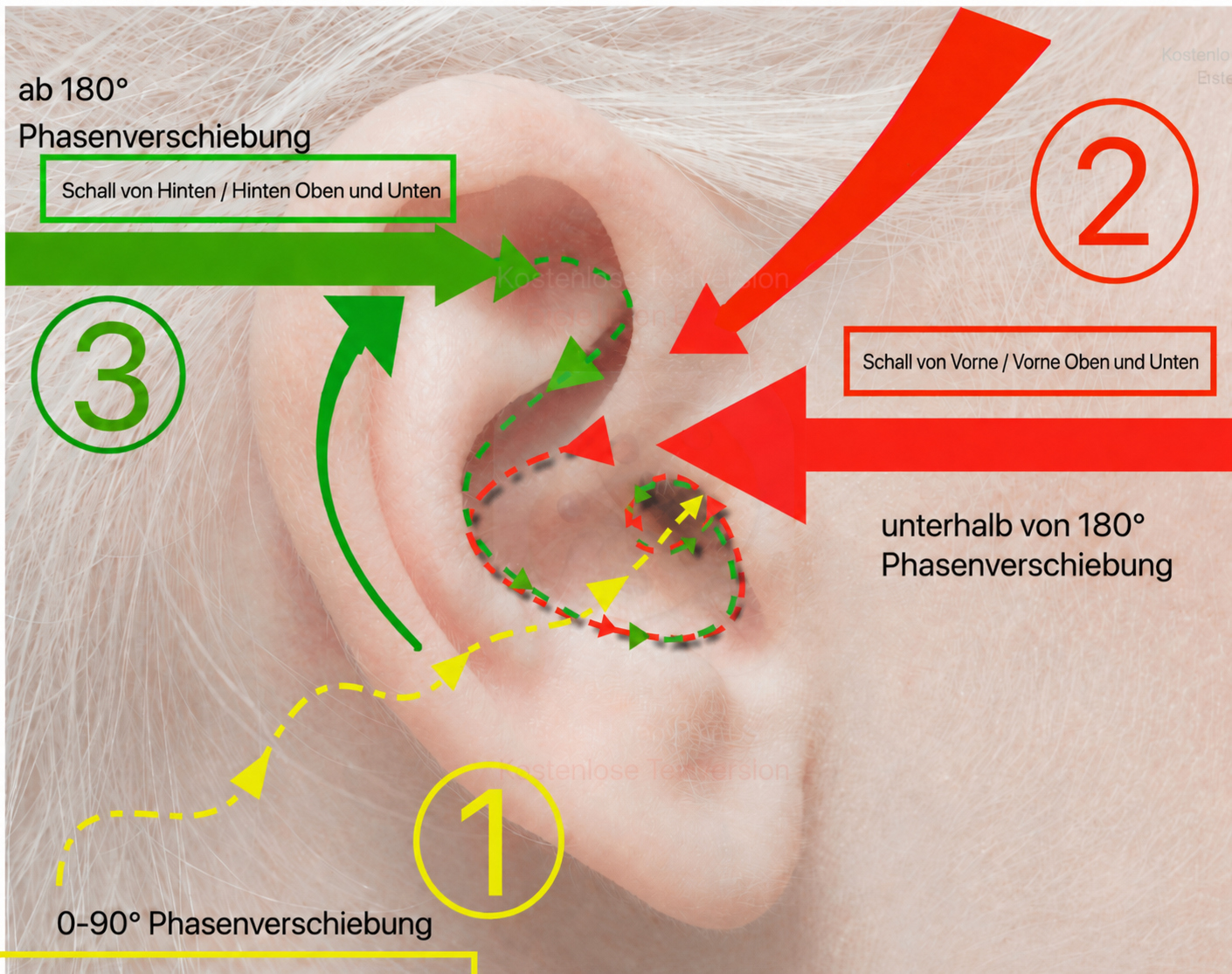
The functional regions and sound paths under investigation at the ear.
Open original diagram ↗These original drawings document the technical working model. Colours and angles are conceptual illustrations, not validated measurements. The geometry and driver arrangement shown remain the basis for development.
Signal processing, precise driver control and coordinated sound profiles.
Signal transmission, conversion and amplification for six audio channels, supported by an appropriate power system.
Three drivers per ear, developed as an acoustic system together with the enclosure and software.
Clean contours. Warm metallic accents. Visible driver placement. The white product concept translates our acoustic approach into a distinctive design.
The design follows the acoustic concept. Driver positioning shapes the character of the headphones.
Selected materials, clean forms and careful craftsmanship define our ambitions for the future production series.
Sound, controls and wearing comfort are intended to work together from the first moment.
Design shown: product vision. Materials and technical specifications will be determined as development progresses.
An initial prototype has been completed. Early partial tests support the basic operation of the concept. We are now developing software for individual control and coordinated operation of the proposed sound paths.
More than ten years of preliminary work and a completed initial prototype provide the foundation. The next step is to develop the software and integrate it with the headphones, electronics and interface.
Early development stage. No finished or certified production product is available yet.
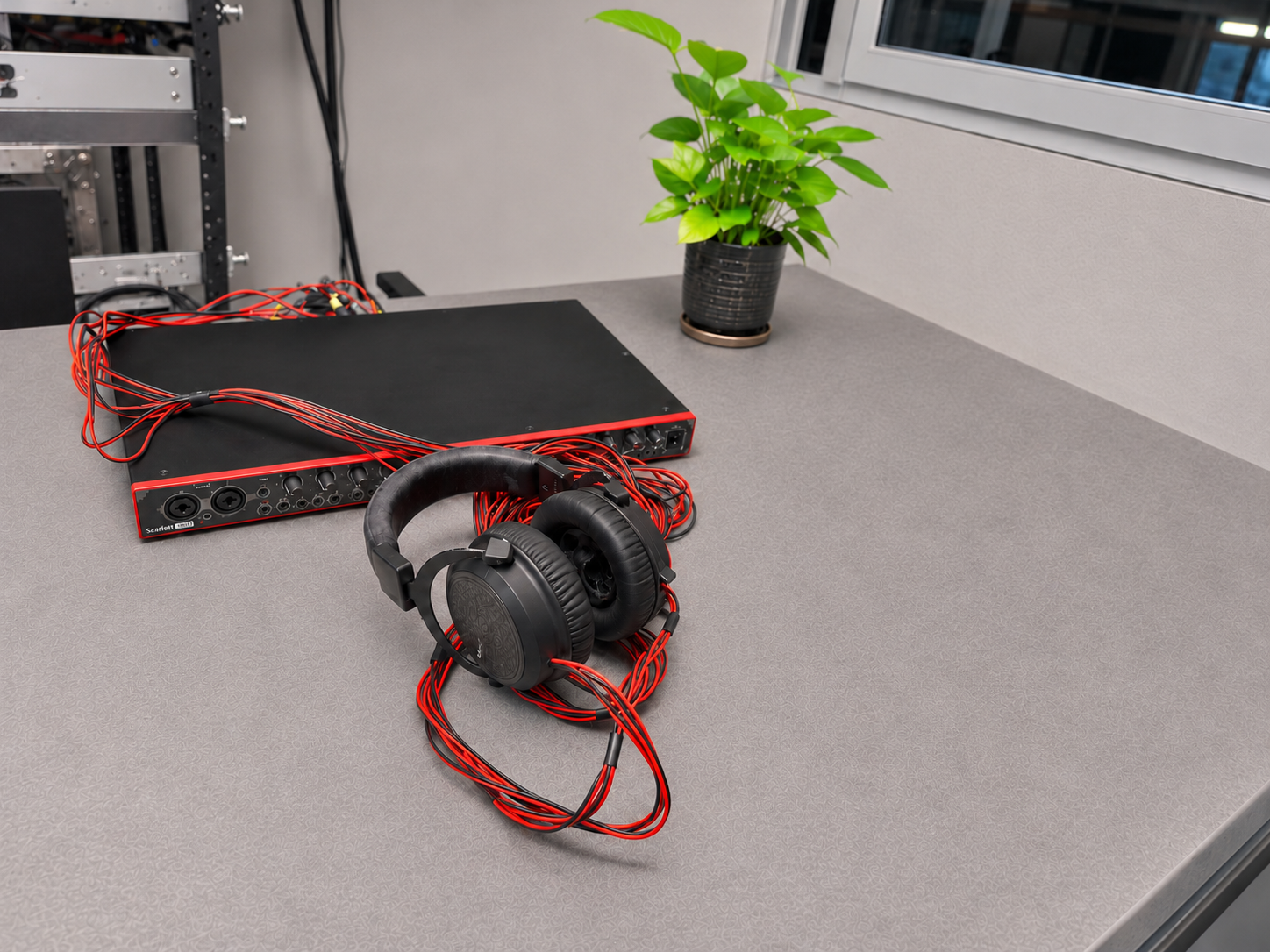
The initial prototype is complete. Early partial tests support the basic operation of the concept.
Building on the preliminary tests, we are developing software to control the intended sound paths and integrate them into the complete system.
Spatial performance, comfort and technical implementation will undergo systematic testing. A production model is not yet available.
A 3D environmental-scanning function is planned for a second development phase. Six microphones, three in different positions on each side, are intended to capture surrounding sounds spatially.
Relevant environmental sounds could be blended into the music and selectively amplified when needed. Sudden peaks in external sound levels are also intended to be detected.
The goal is to enjoy music while remaining aware of your surroundings, including in everyday life and while navigating traffic.
Planned feature for a later development phase. Development and validation are pending; suitability for use in traffic has not been established.
Sitter-Audio Real 3D Audio combines three differently positioned drivers per ear with dedicated multichannel control. The objective is spatial perception through the interaction of ear geometry, driver arrangement and signal processing. Performance will be evaluated during development.
The Sitter-Audio concept takes inspiration from human hearing. Our working hypothesis identifies three relevant sound paths at each ear: anterior, lateral and posterior. These provide the basis for the development model. Three paths on each side lead to six audio channels intended to drive the ear-oriented sound paths separately and work together to create spatial perception. Both the technical implementation and spatial results will be evaluated during development.
The initial prototype is complete. Preliminary tests support the basic concept and inform current software development. The software is intended to control the three paths at each ear and coordinate them within the system. Integration, systematic measurements and scientific validation will follow. Product illustrations show the intended development direction.
Not yet. Sitter-Audio is still in development. Details about the first production series will be shared when the next steps are confirmed.
Interested in Sitter-Audio or following our progress? Get in touch with the founder.
Interested in shaping the next stage of development? Contact Sascha Sitter to discuss the technology and potential collaboration.
Both types of enquiry go directly to Sascha Sitter with the relevant subject line.

Founder and developer of Sitter-Audio. Sascha Sitter has spent more than ten years working on an original approach to spatial hearing.
business@sitter-audio.com ↗For a later phase, 3D environmental scanning using six microphones is envisaged. Three microphones on each side would capture external sounds from different positions.
Relevant external sounds could be mixed into playback and amplified in a controlled way when needed. Sudden changes in sound level would also be detected to help preserve awareness of important environmental cues.
The aim is to combine listening enjoyment with environmental awareness in everyday situations, including navigation in traffic.
Future concept for the second phase. The feature has yet to be developed and validated. Suitability for use in traffic has not been confirmed.